
Access Quincy Unclaimed Money
Quincy residents can search unclaimed money held by the state of Massachusetts through a free online portal at FindMassMoney.gov. Funds sitting in the state's database come from old bank accounts, forgotten checks, insurance proceeds, and dozens of other sources, and the state holds them until the rightful owner files a claim.
Quincy Overview
How to Search Unclaimed Money in Quincy
Go to the claim search tool at FindMassMoney.gov. Type your last name and first name and hit search. The system checks all reported unclaimed property in Massachusetts and returns any matches tied to your name.
Quincy is a city where a lot of people have deep roots. Many families have lived here for generations. That's part of why old accounts and forgotten checks show up so often. Banks change hands, insurers get acquired, companies close. The assets get reported to the state, but not everyone knows to look.
Try a few variations of your name when you search. Some people go by a middle name, and the state database uses whatever name the original holder had on file. Former addresses also matter. If you lived at multiple Quincy addresses over the years, a match may be listed under an old address even if your name is the same.
The state's search tips page covers these points in detail. It's worth a read before you start, especially if you have a common last name. The whole process takes maybe five minutes and costs nothing.
On average, one in ten Massachusetts residents has unclaimed funds on file. Claims run between $1,250 and $2,080 on average. Some are worth far more. You won't know unless you search.

The City of Quincy's official website connects residents with government services, including vital records and public records requests.
Quincy City Clerk
The Quincy City Clerk's office is at 1305 Hancock Street, Quincy, MA 02169. The phone number is 617-376-1144. You can reach the office by email at cityclerk@quincyma.gov or through the City of Quincy website.
The Clerk handles vital records for the city. That includes birth, death, and marriage records. If you need a certified copy of any of these, the Clerk's office is the right contact. Certified vital records can be required documents when filing an unclaimed property claim, especially if you're claiming on behalf of a deceased person's estate.
The Clerk also maintains City Council records and processes public records requests. If you need documents from city government, this is where you start. Response times and fees for public records follow the state's public records law.
For property-specific records, Quincy's assessors maintain data on all parcels within the city. If you need to confirm a property address or ownership detail for a claim, contact the city's assessing department through the Quincy website.
How to File a Claim
Filing a claim starts at FindMassMoney.gov. Once you find a match, click on it and follow the prompts to begin your claim. The state's claim completion guide explains each step.
You need to prove who you are and show a link to the property. For most claims, that means a government-issued photo ID, a document showing your Social Security number, and something that ties you to the original address or account on file. A past bank statement, lease, or utility bill can all work.
Estate claims require more paperwork. A death certificate is the starting point. From there, the state may need a will, letters of administration, or an affidavit depending on how the estate is set up. The claiming FAQ covers these situations and is worth checking before you start an estate claim.
Around a third of all claims are auto-approved. The rest go through a manual review. Processing takes about 180 days across the board, but simpler claims often resolve faster. You can check your claim's status online after you submit it.
There is no deadline. Massachusetts law does not expire your right to claim. The state will hold it until you or your heirs come forward. But the sooner you file, the sooner you get paid.
Types of Unclaimed Property
The state holds many types of property. Bank accounts are the most common, but the list goes well beyond that. Insurance policy proceeds, uncashed dividend checks, and security deposits all show up in the database.
Other common types include certificates of deposit, stock shares and mutual fund balances, payroll checks that were never cashed, refund checks from utilities or retailers, and the contents of safe deposit boxes. Even a small credit balance on a closed account can end up in the state fund after a few years of no activity.
Under Section 3 of Chapter 200A, holders must report dormant property to the state. The dormancy period for most accounts is three years. After that, the bank, insurer, or company sends the funds to the state and the state notifies you if it can find a current address. If not, the property just sits in the database until someone claims it.
Quincy residents who've had accounts at banks that later merged or closed, or who used to work for companies that have since shut down, are especially likely to have something on file. Old payroll systems and closed branch locations are a common source of lost funds.
Norfolk County Registry of Deeds
Quincy falls within the Norfolk County Registry of Deeds. The Registry is at 649 High Street, Dedham, MA 02026. The phone is 781-461-6101. Online search is available at NorfolkDeeds.org.
The Registry holds all recorded land documents for Norfolk County, including Quincy. Deeds, mortgages, liens, and plans are all on file here. If you are trying to trace a Quincy property's ownership history, the Registry is the right place to search. Records go back many decades and are searchable by name or address online.
Deed records sometimes connect to unclaimed property. Real estate closings can generate refund checks or escrow overages that go uncashed. If you've bought or sold a Quincy property in the past and never received a final settlement document or check, search the state database. That money may have been reported to the state.
The Registry's online index makes it easy to search by owner name. You can confirm your link to a specific parcel, which can strengthen an unclaimed property claim if the property at issue was tied to a Quincy address you once owned or rented.
Massachusetts Unclaimed Property Law
The law that covers all of this is MGL Chapter 200A. It sets out the rules for what gets reported, when it gets reported, and how you get it back.
Section 5 is the key provision on dormancy. It tells holders when they must report. Most accounts go dormant after three years of no owner contact. Holders must try to notify you before they report. If they can't find you, they send the funds to the state.
Section 9A addresses how claims are paid. Section 13 covers the overall claims framework. Together these sections make clear that your right to claim does not expire. The state holds the property in trust for you and your heirs indefinitely.
The Unclaimed Property Division sits within the Office of the State Treasurer. Its office is at One Ashburton Place, 12th Floor, Boston, MA 02108. Phone: (617) 367-0400. Toll-free: 888-344-6277. More detail is at Mass.gov and the FAQ section.
For property reported in other states, check MissingMoney.com. That site aggregates unclaimed property databases from many states. If you've lived outside Massachusetts at any point, it's a good extra step.
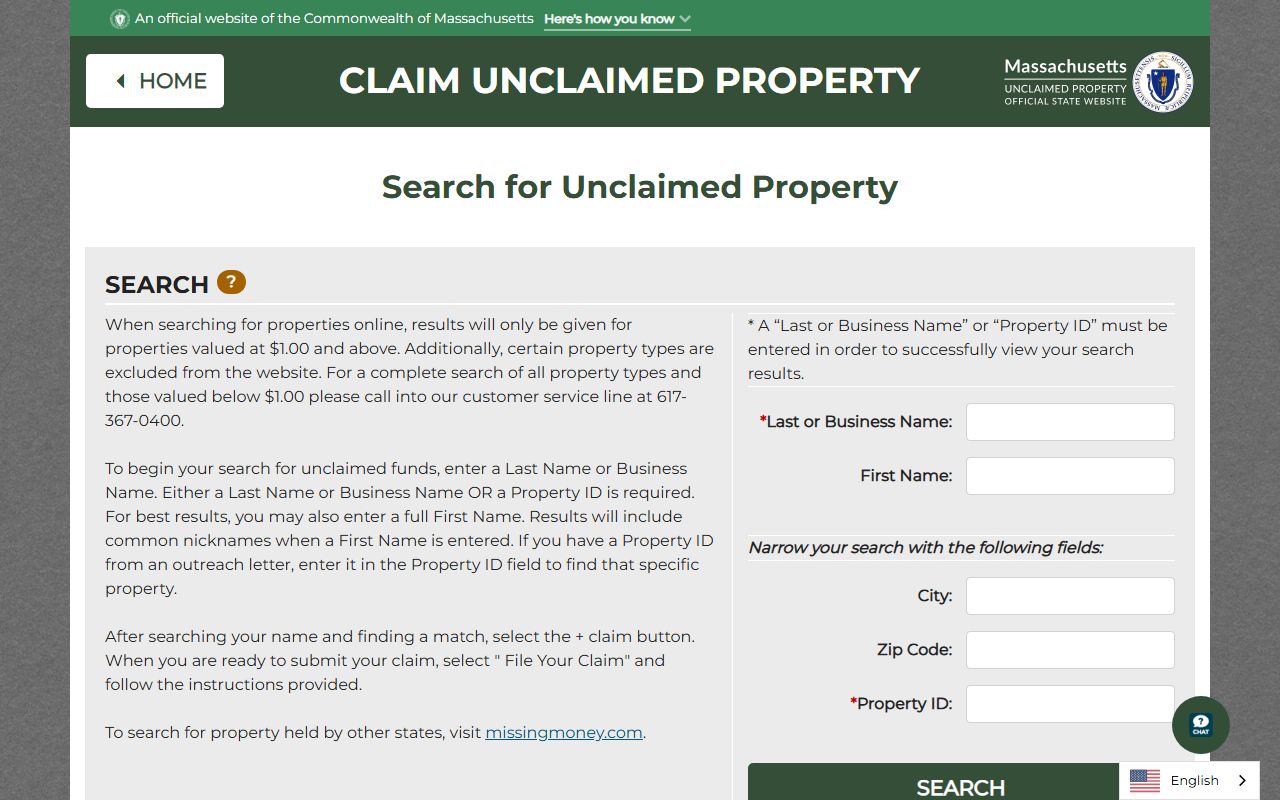
The state's search interface lets you look up names and find unclaimed funds, including property linked to past Quincy addresses.
Norfolk County Unclaimed Money
Quincy is in Norfolk County. The county page has more local resources and Registry of Deeds info for your area.
Nearby Cities
Unclaimed money pages are available for these nearby Massachusetts cities.